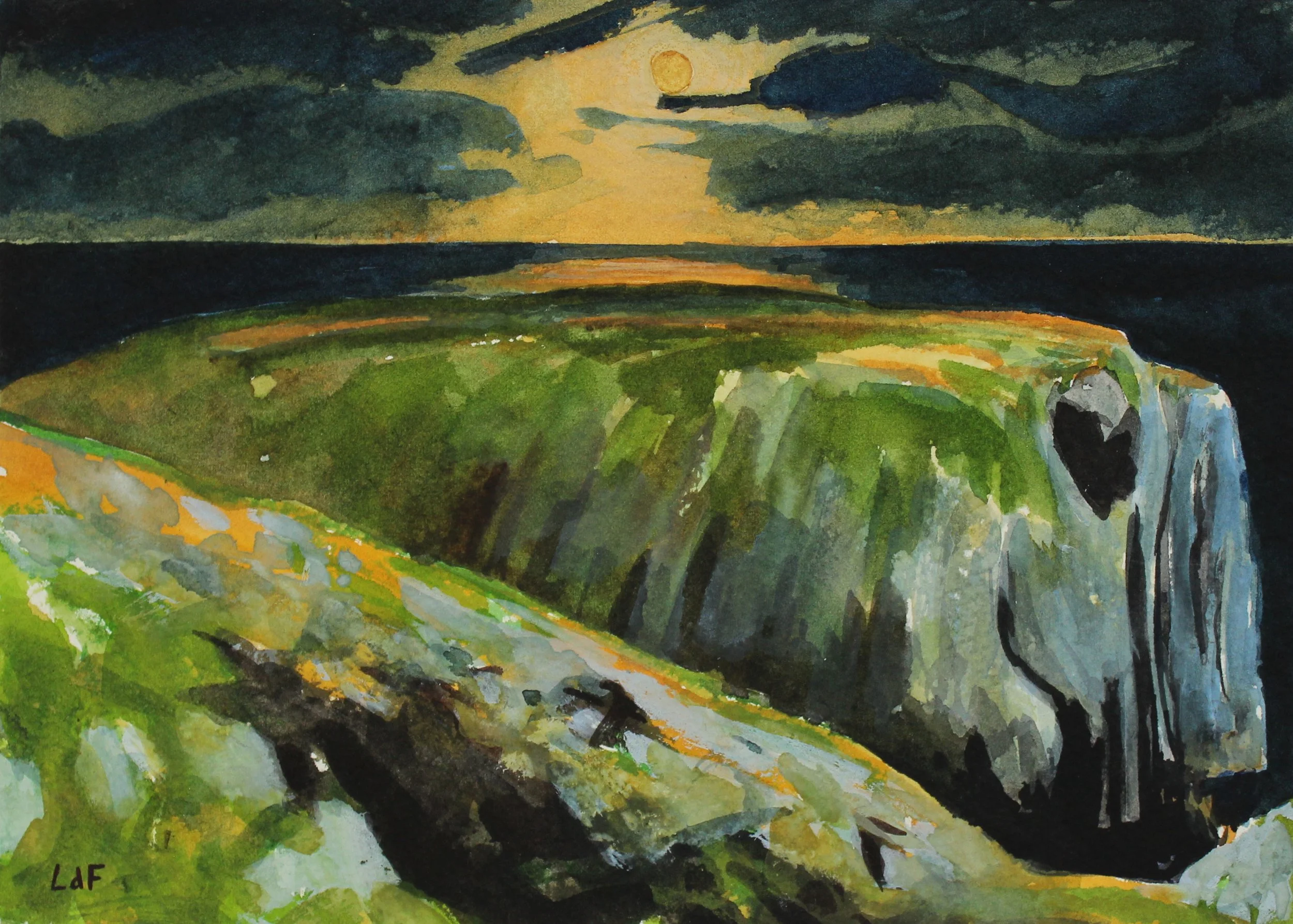
Island as Muse
Isle of May
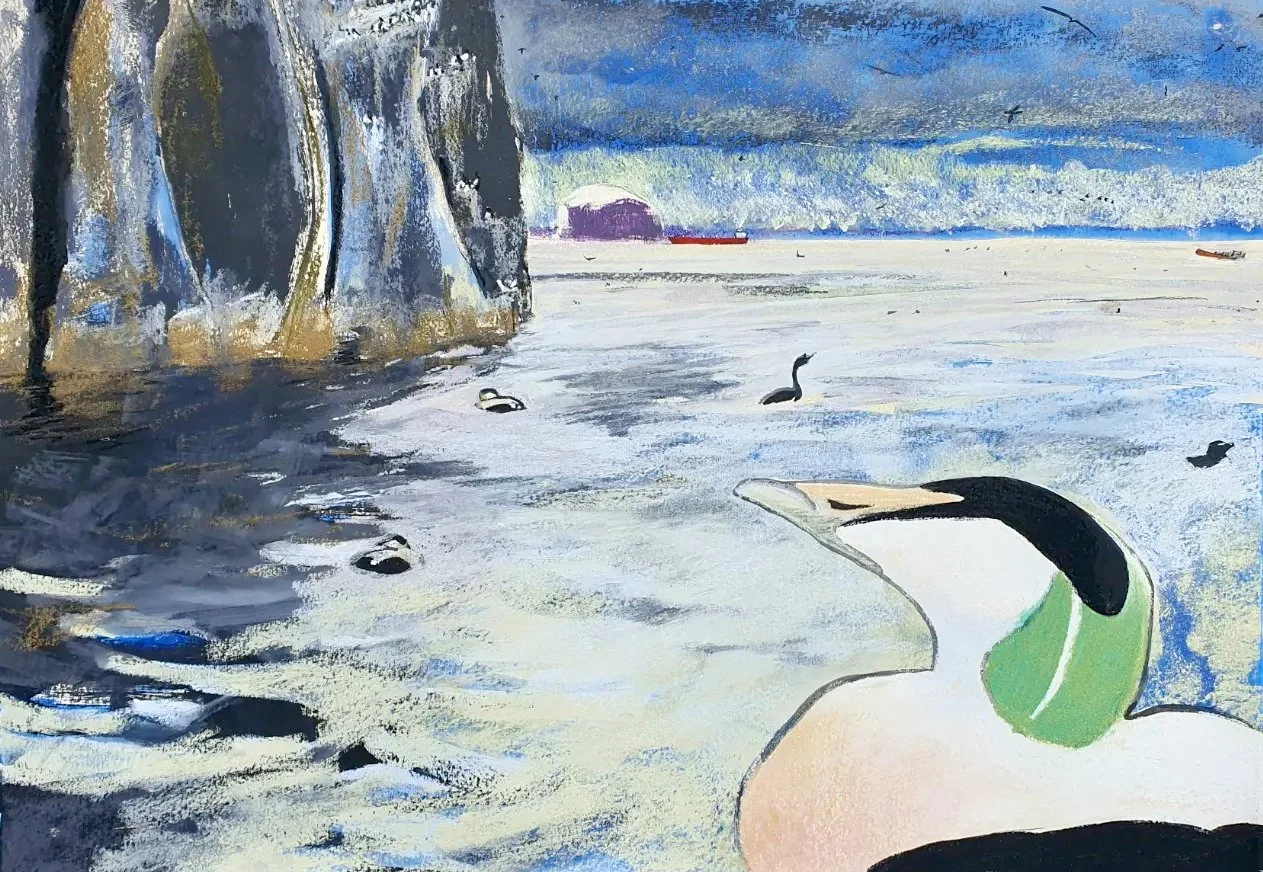
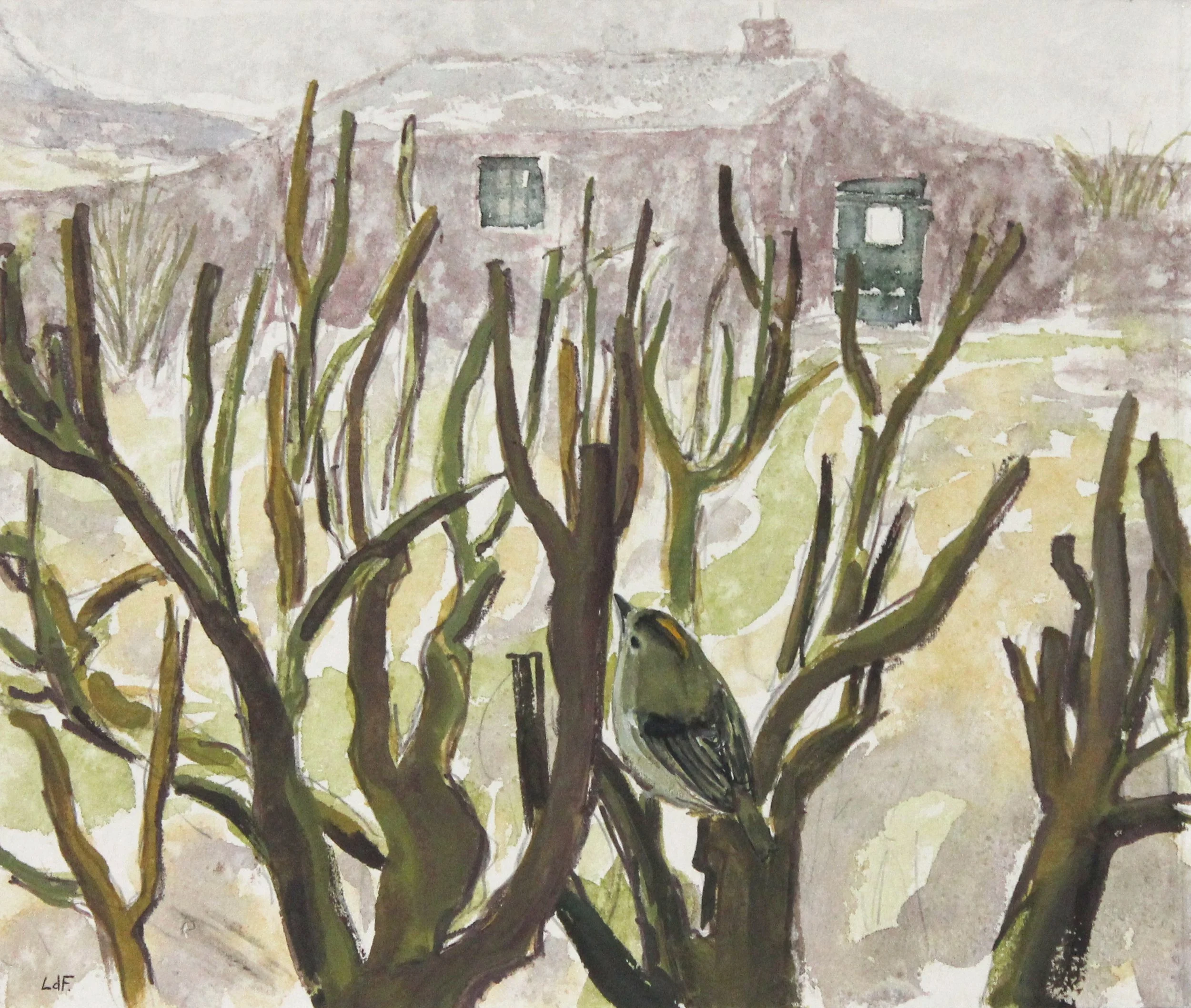
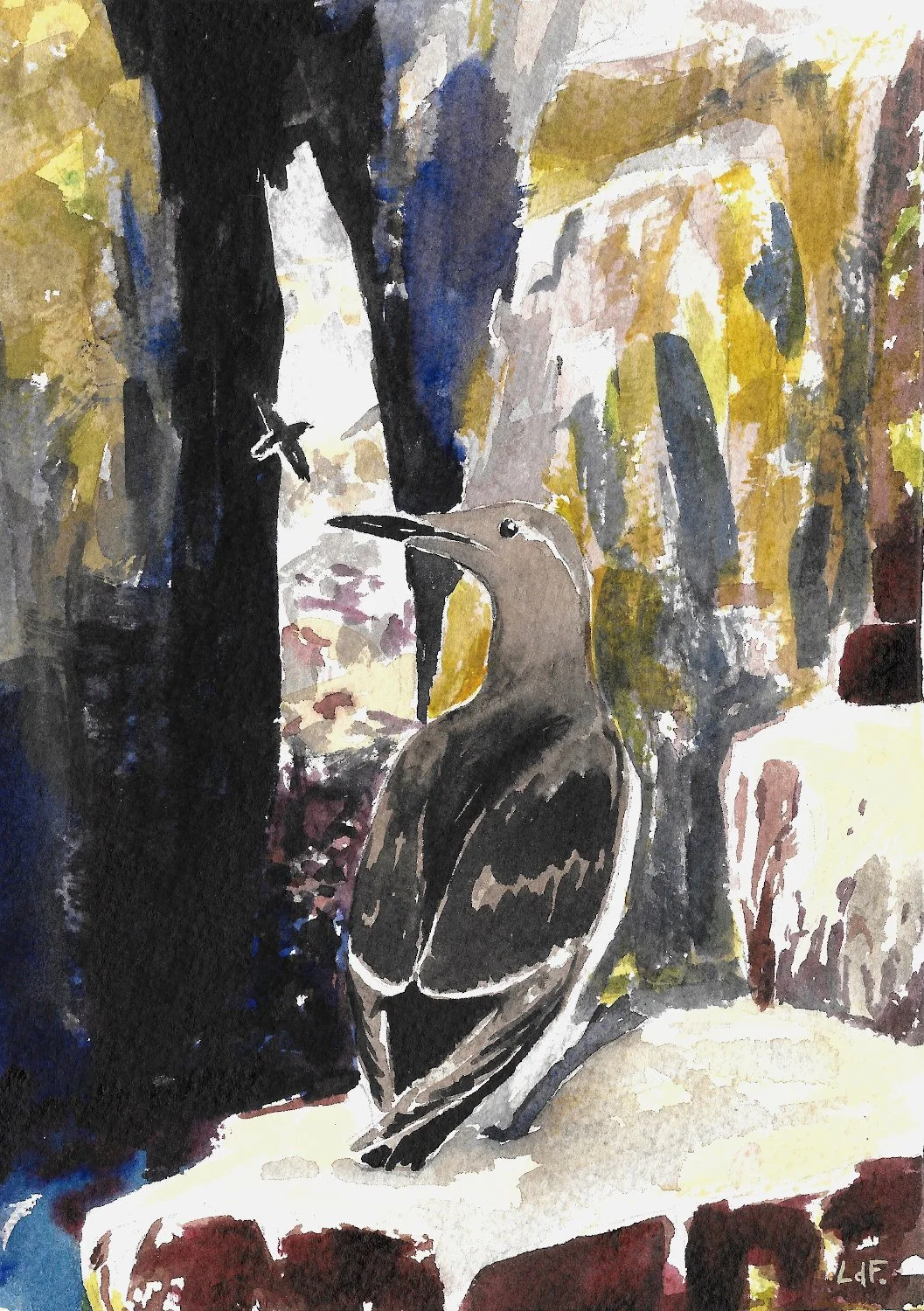
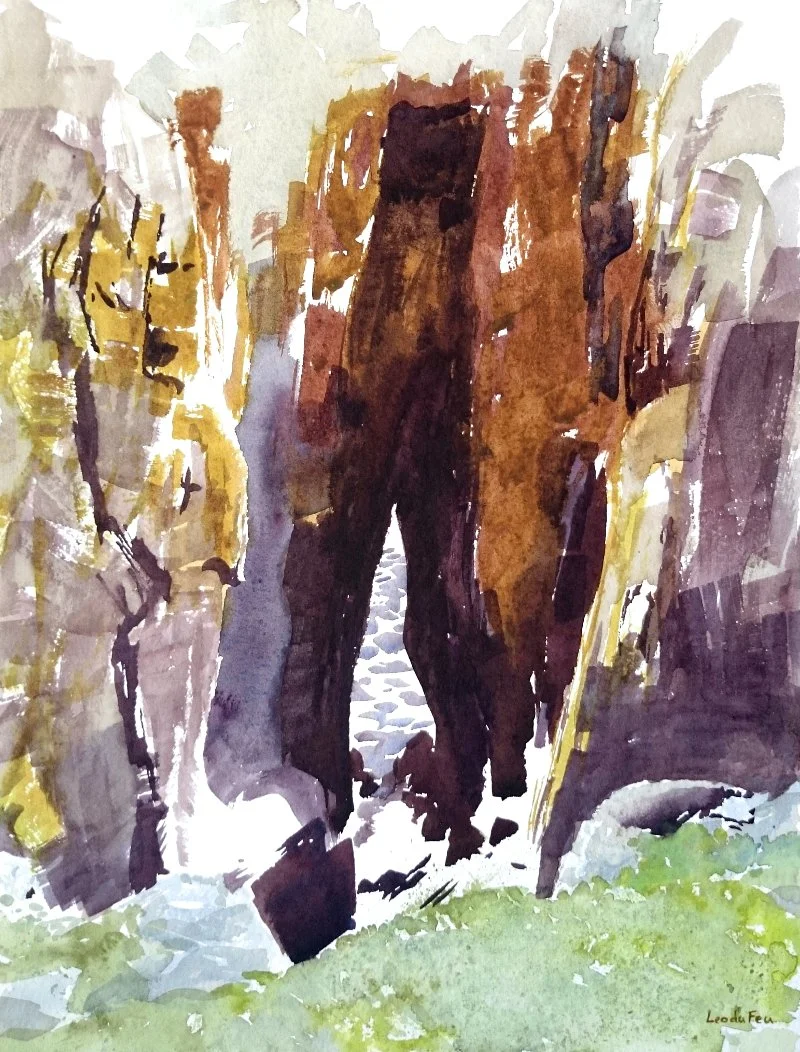
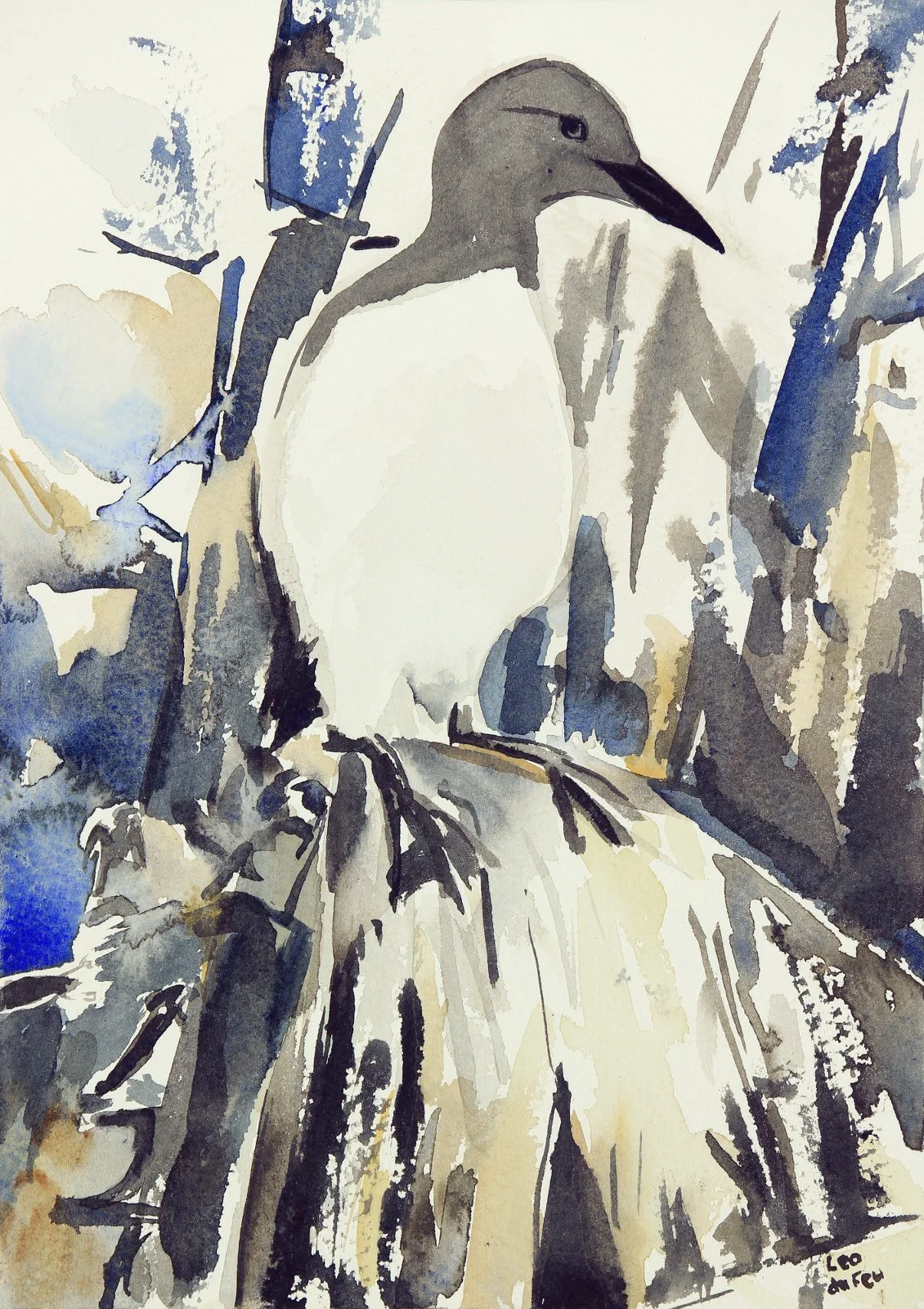
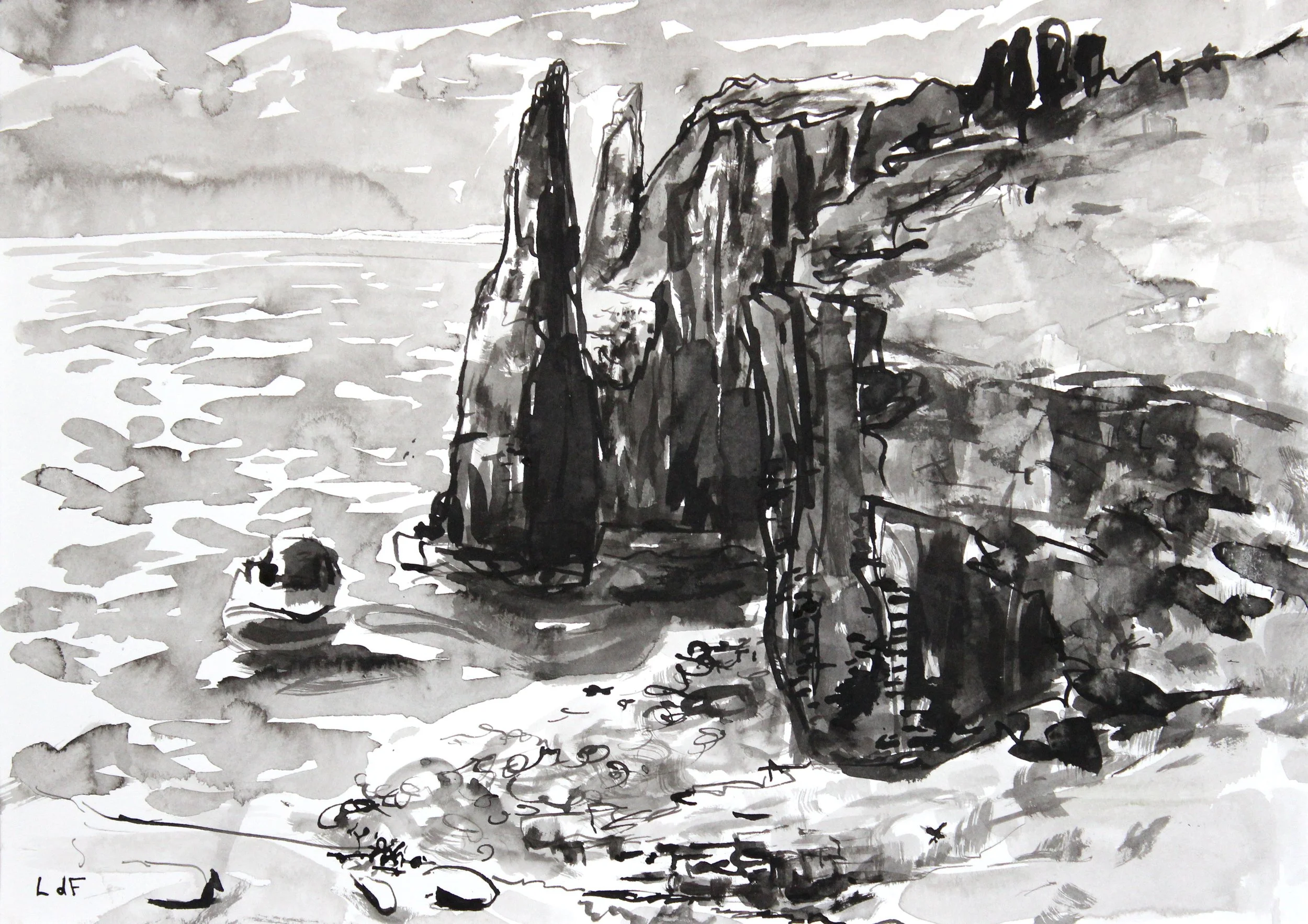
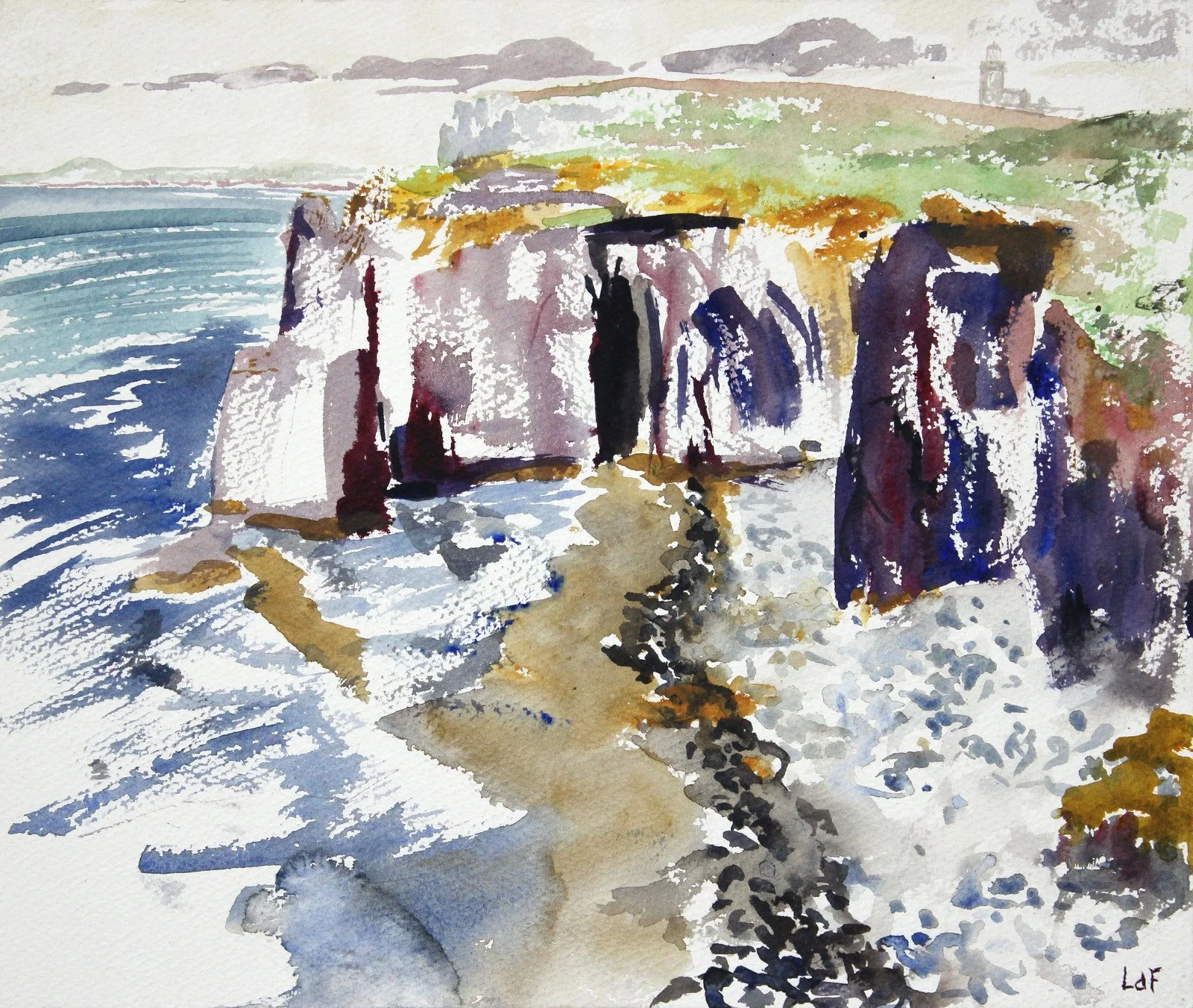
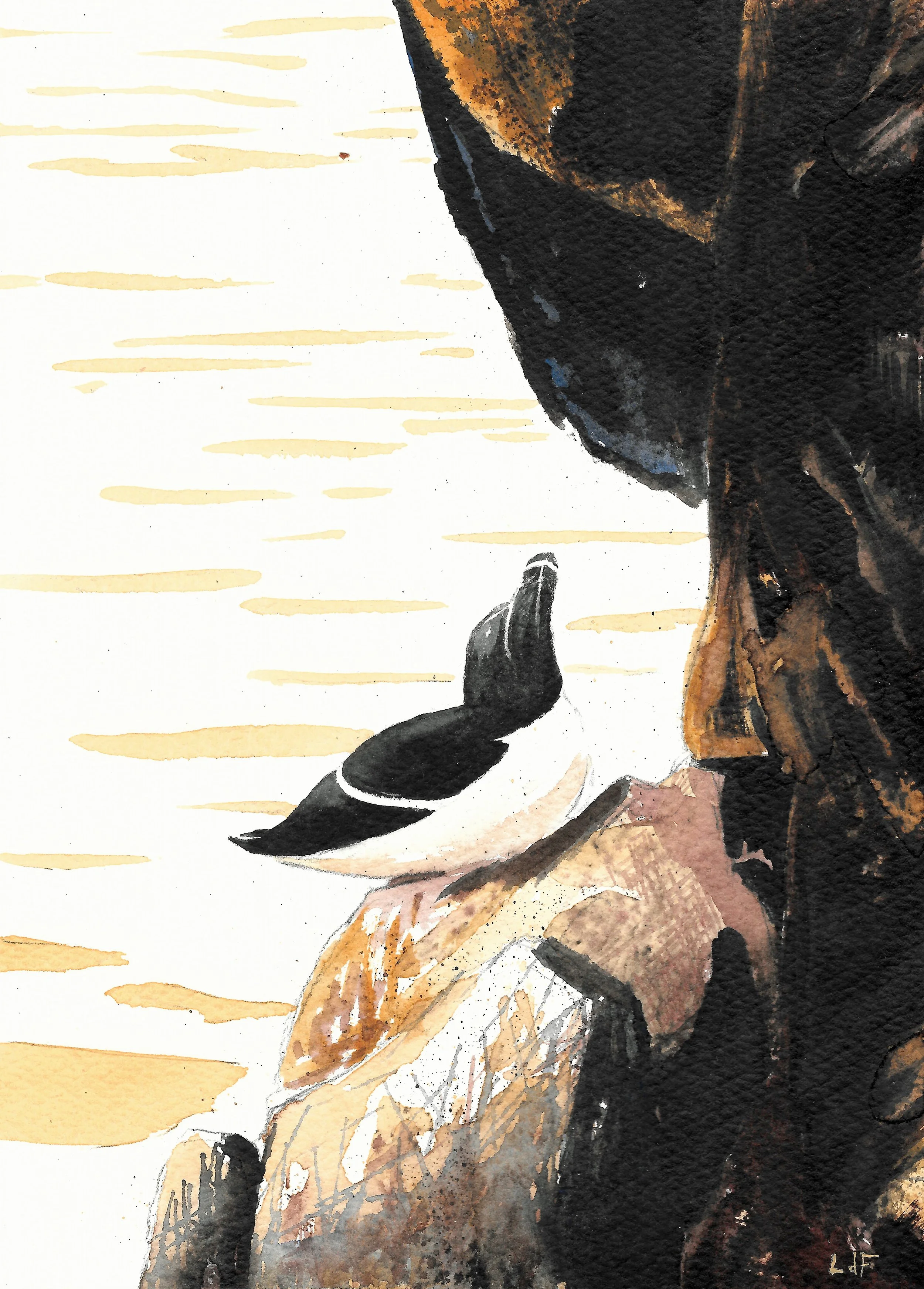
A glorious seabird island at the mouth of the Firth of Forth, where estuary meets North Sea on Scotland’s east coast. Home to hundreds of thousands of seabirds – puffins, razorbills, guillemots, fulmars, kittiwakes, gulls and more more more. Leo and artist colleagues stay in the Isle of May Bird Observatory for several weeks each year. Painting, sketching, absorbing. One of Leo’s most important of all places. This page includes text from the artist, insights into life on the island.
Recent Isle of May Paintings
-
![]()
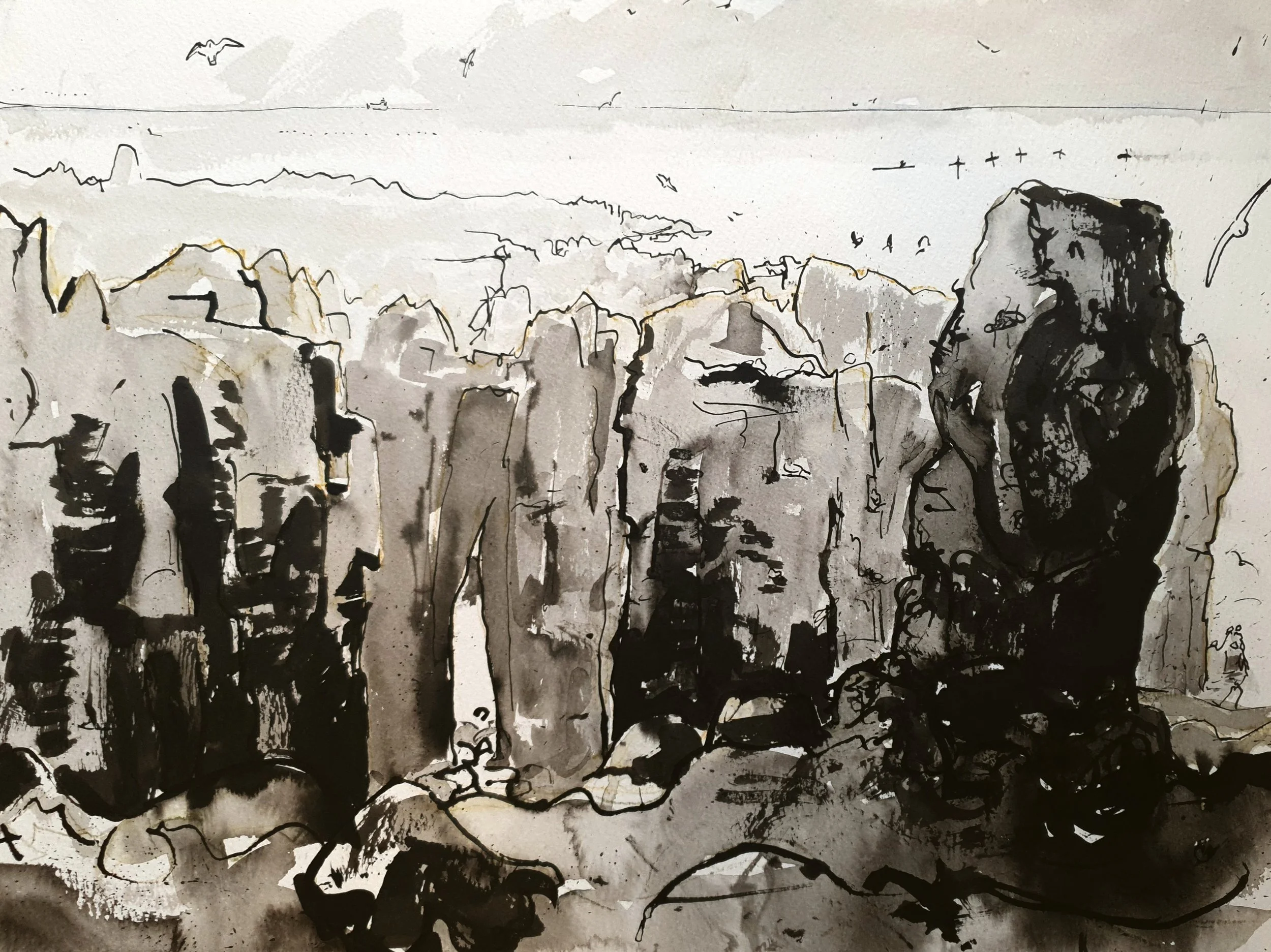
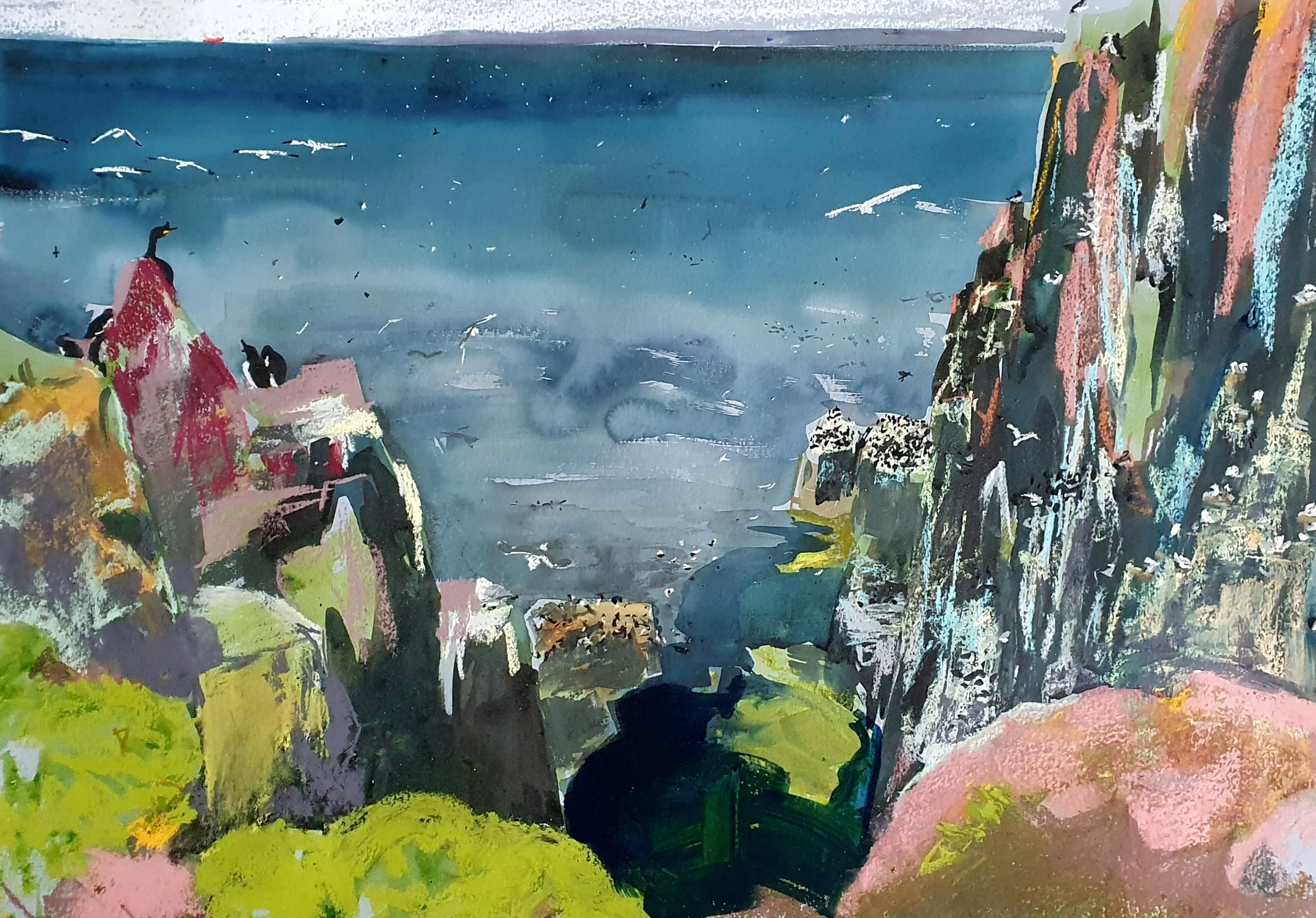
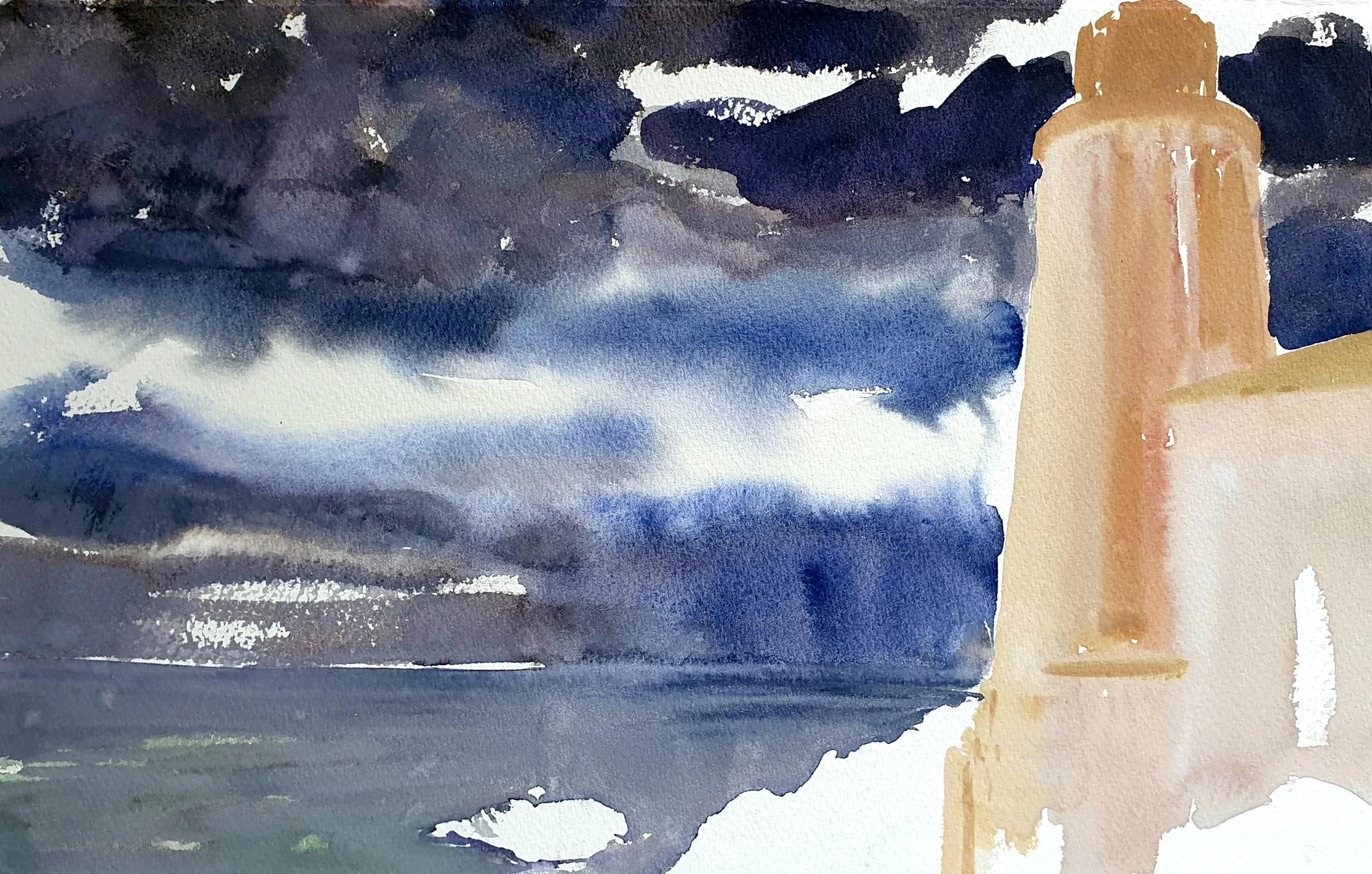
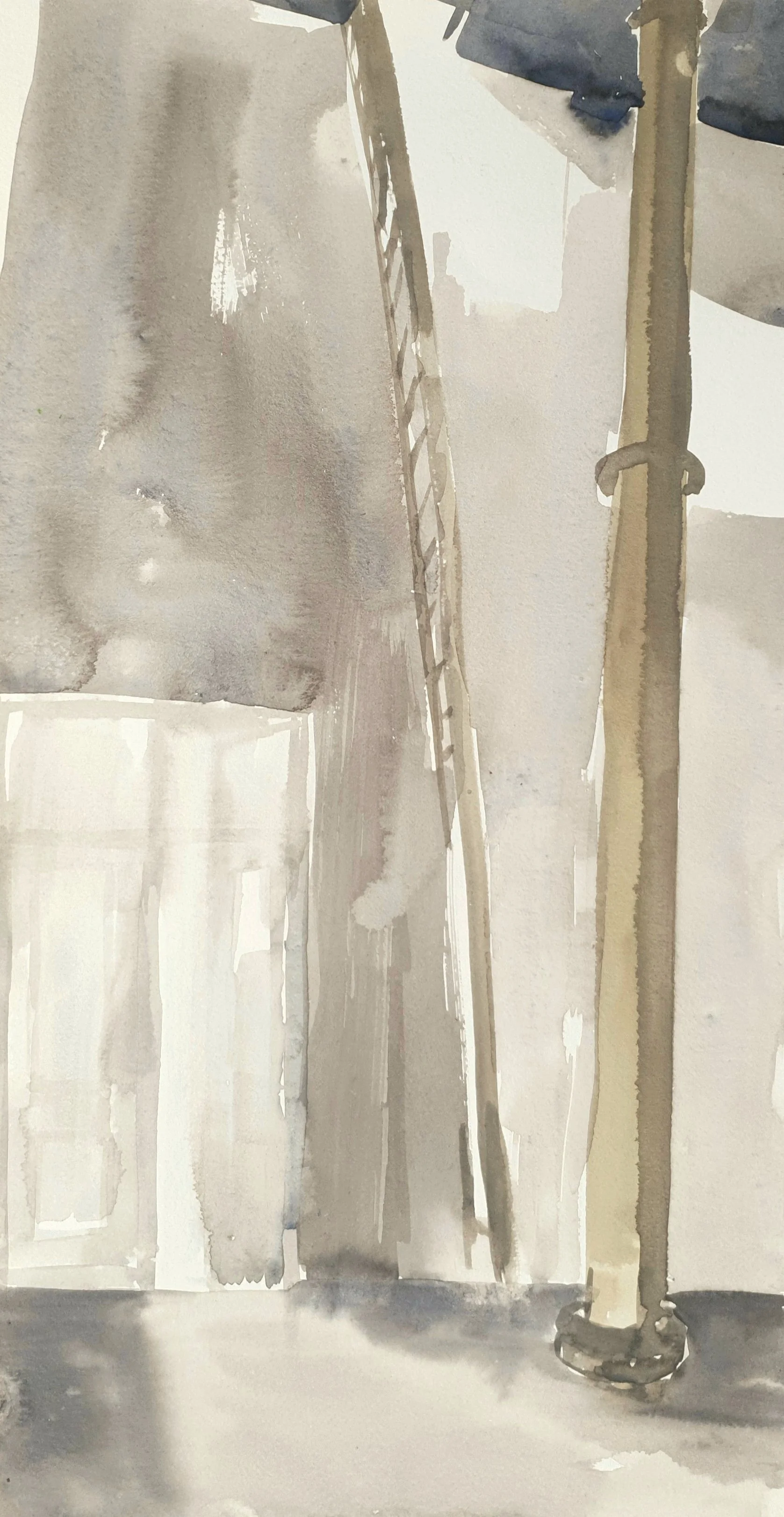
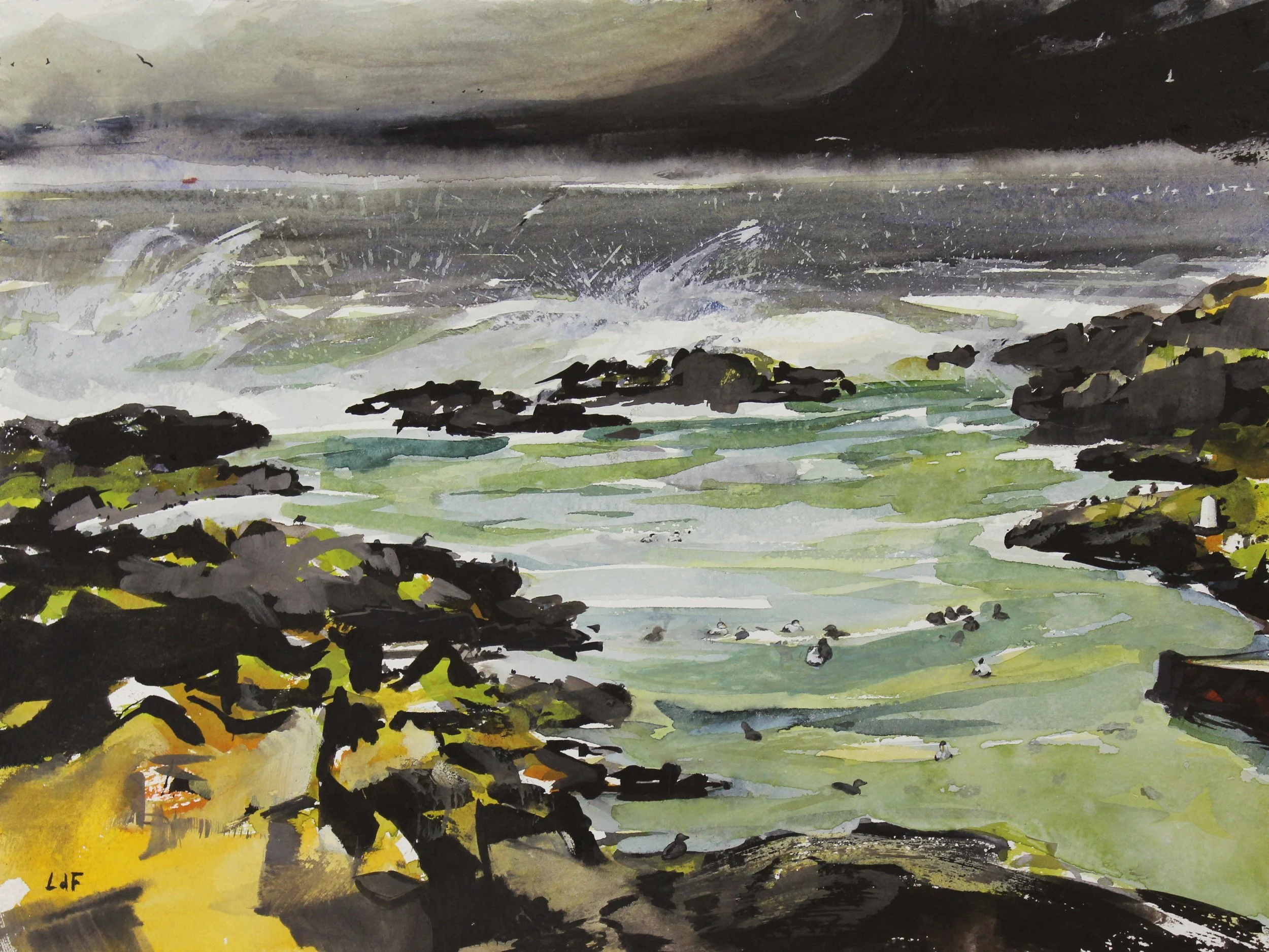
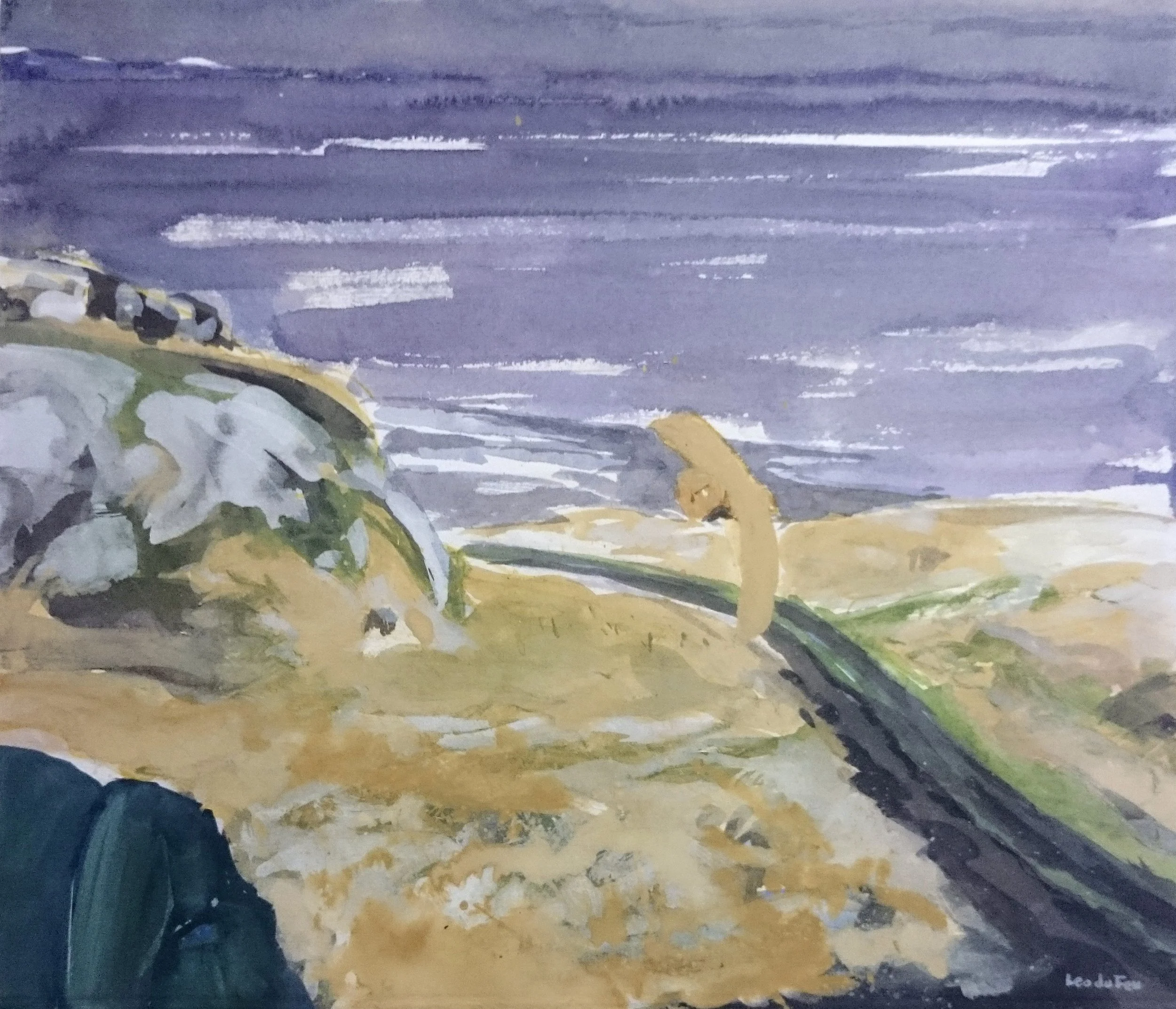
The Cliffs are Alive | mixed media on paper, c.60x80cm, 2025, available
-
![]()
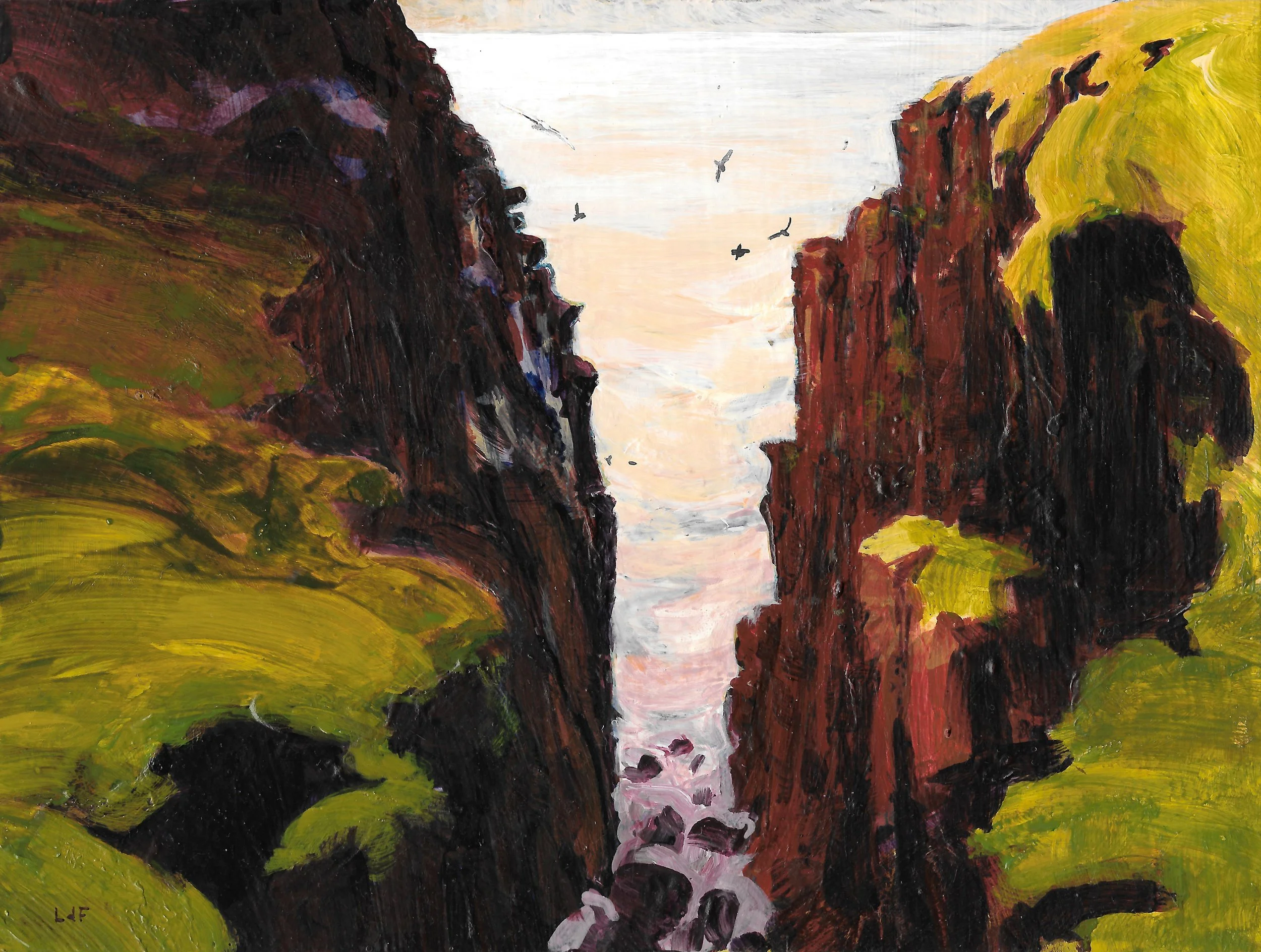
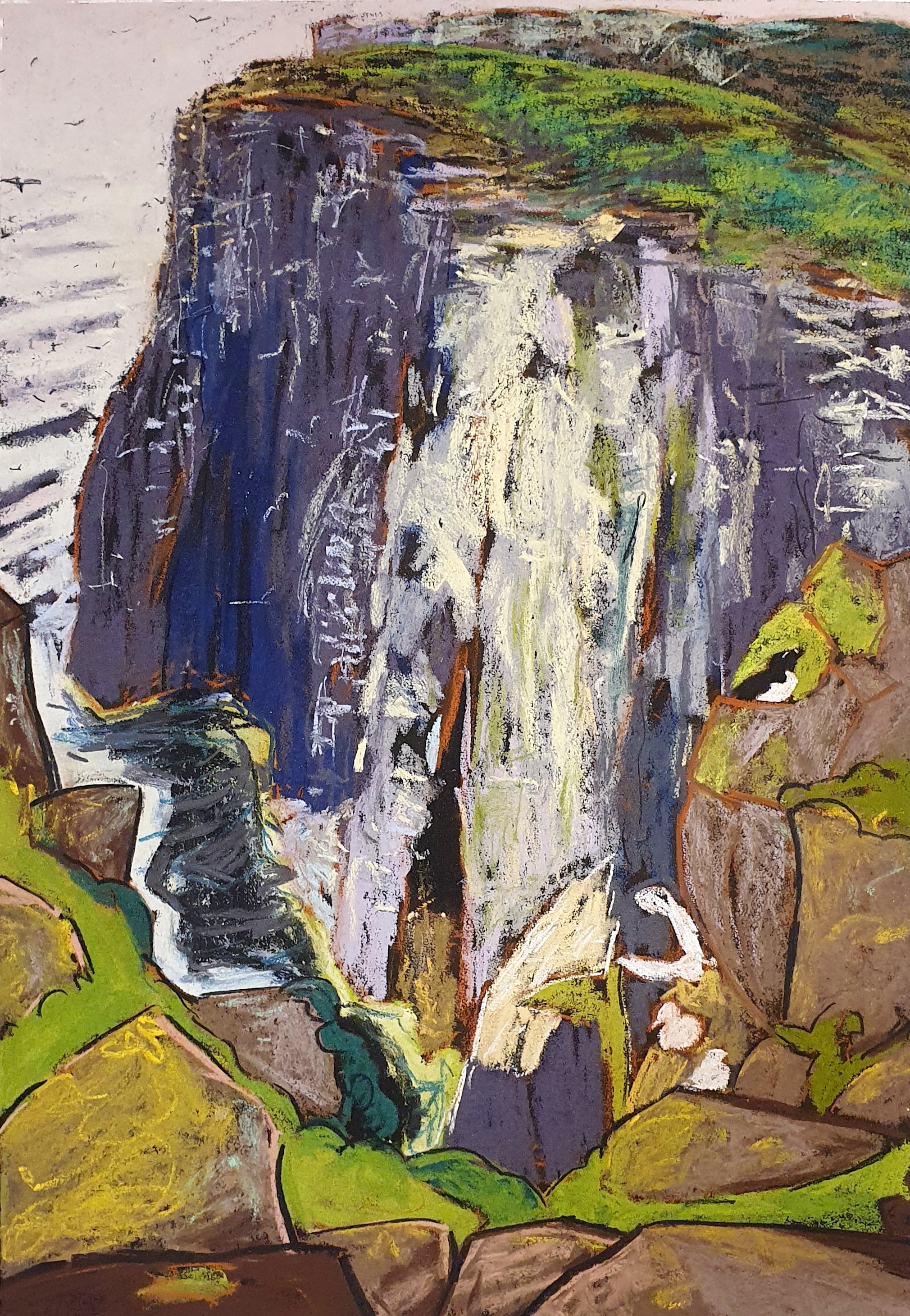
The Angel, the Haven, the South Horn | mixed media on paper, c.60x80cm, 2025, available
-
![]()
Mist on the Island | mixed media on paper, c.60x80cm, 2025, available
-
![]()
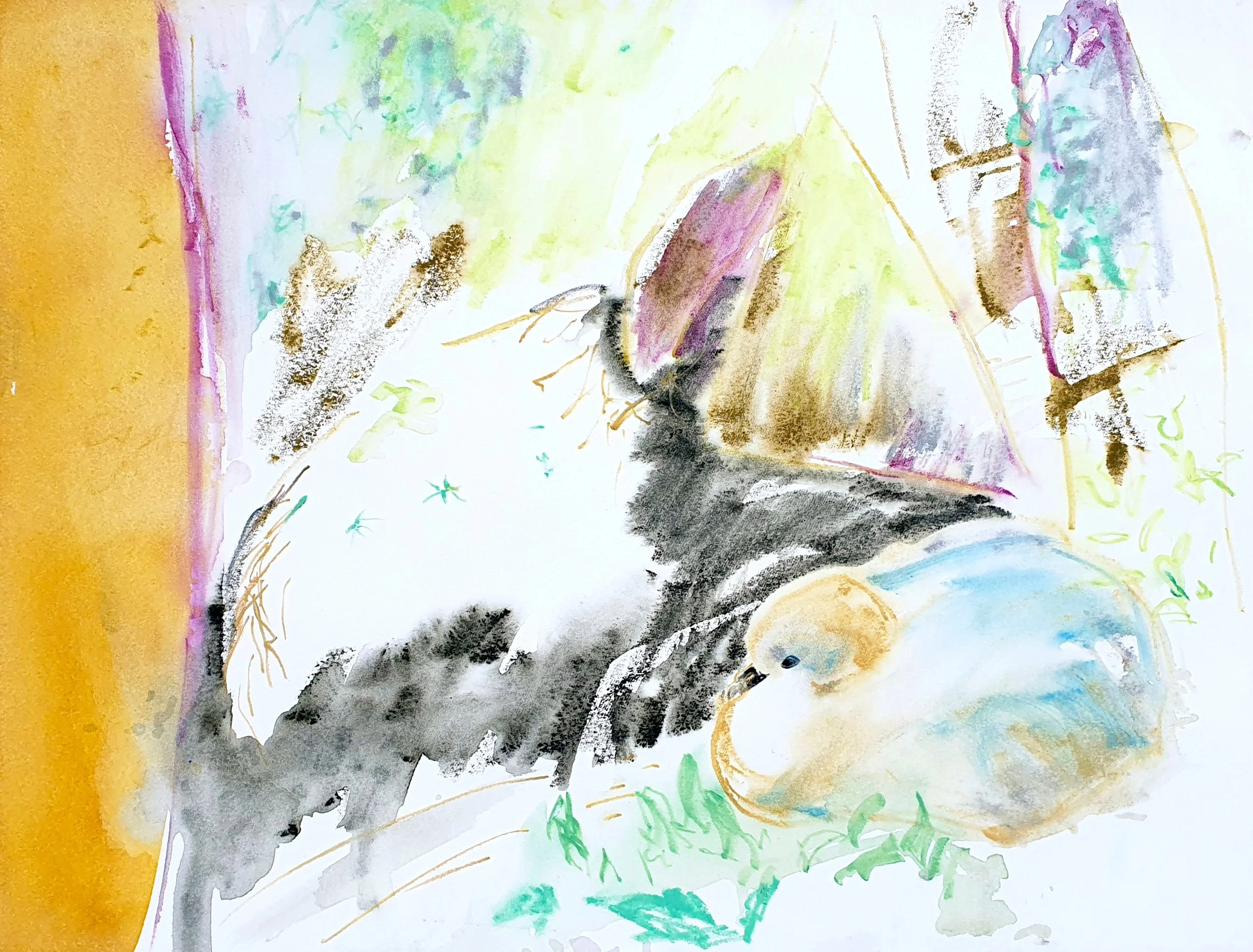
Like Unrisen Dough, A Baby Fulmar Fluffball | mixed media on paper, c.25x35cm, 2025, available
-
![]()
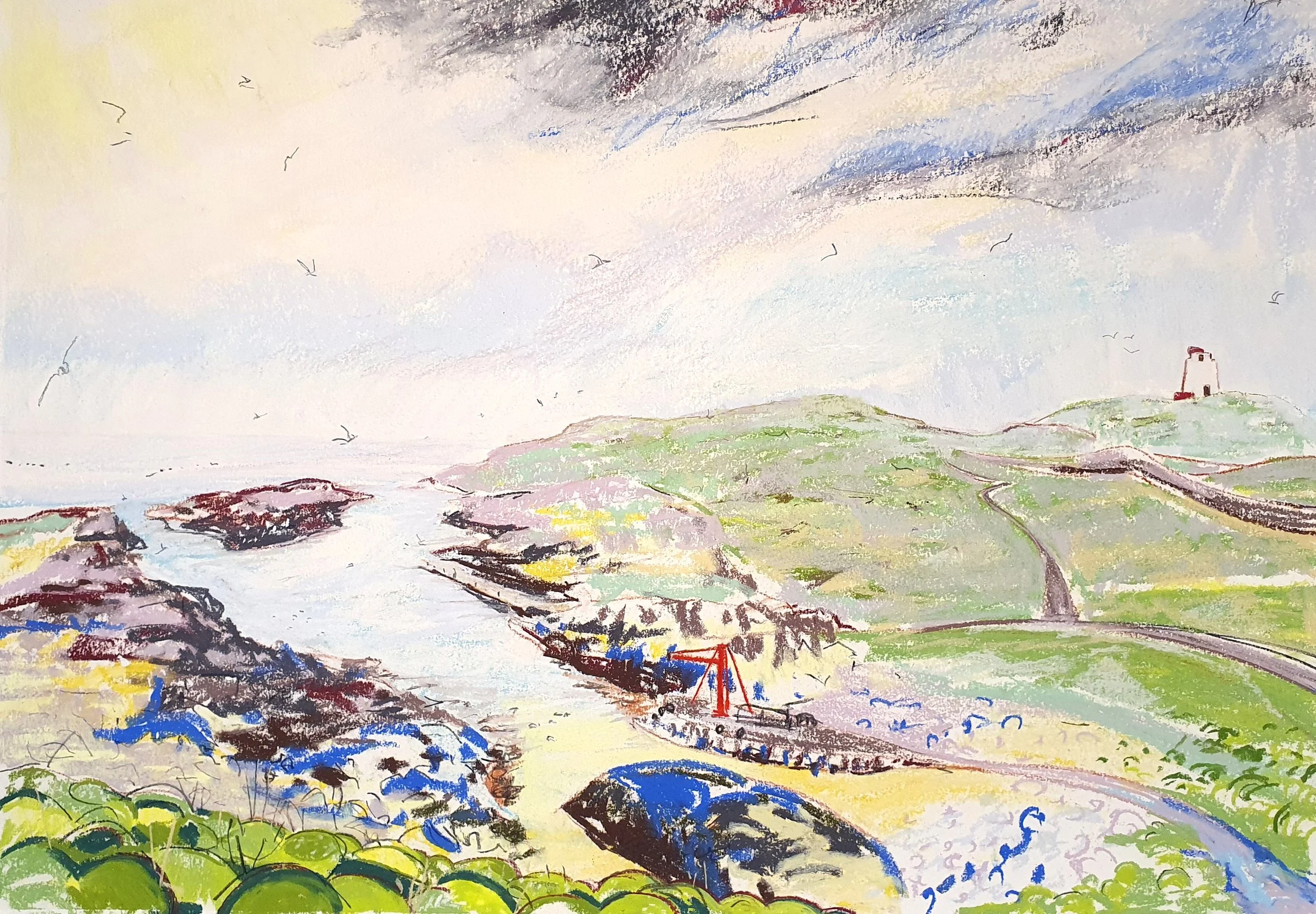
Jellies in the Harbour Rain | mixed media on paper, c.60x80cm, 2025, available
-
![]()
Jellies and Fish in the Harbour Sun | mixed media on paper, c.60x80cm, 2025, available
-
![]()
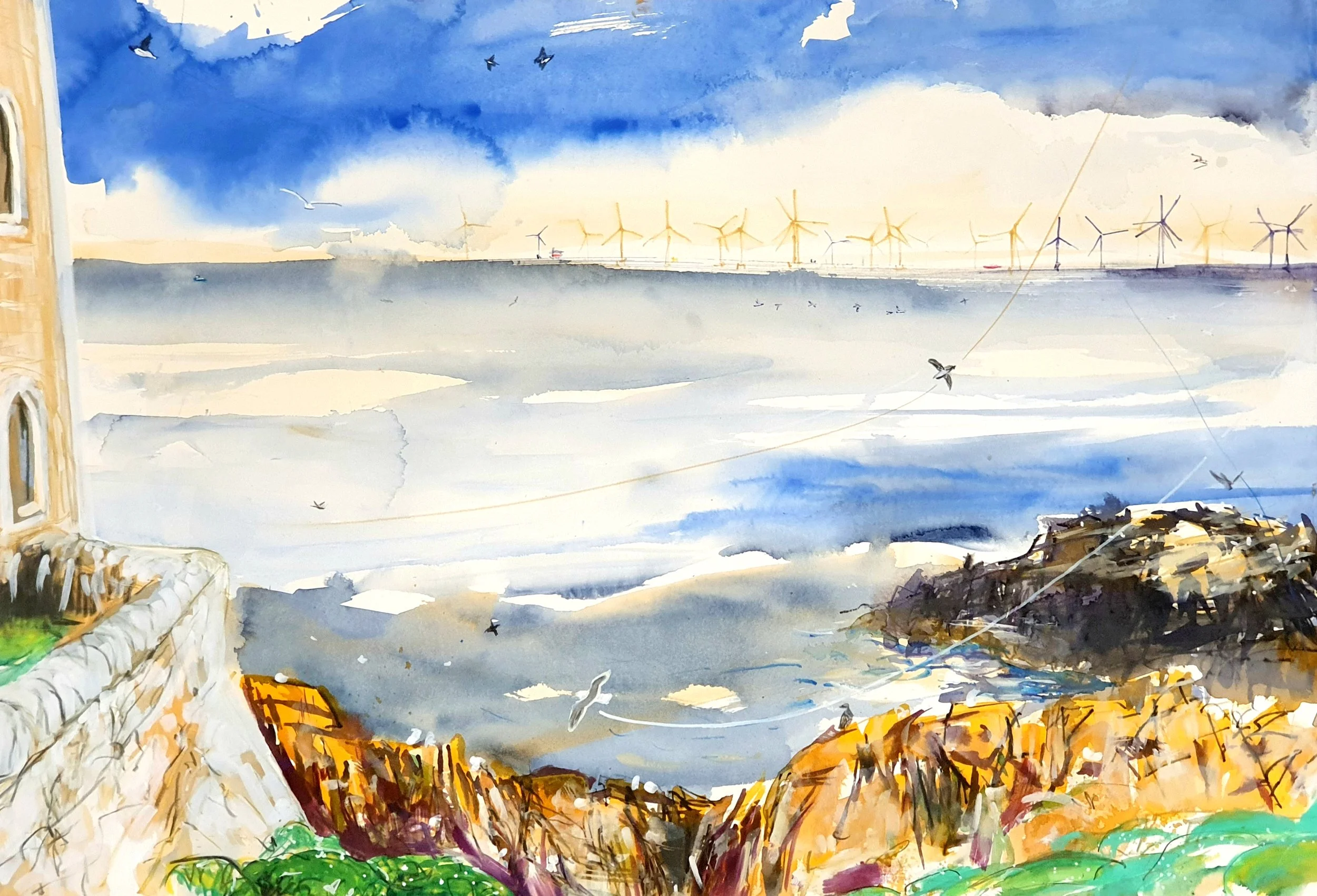
Bishop's Cove | mixed media on paper, c.60x80cm, 2025, available
-
![]()
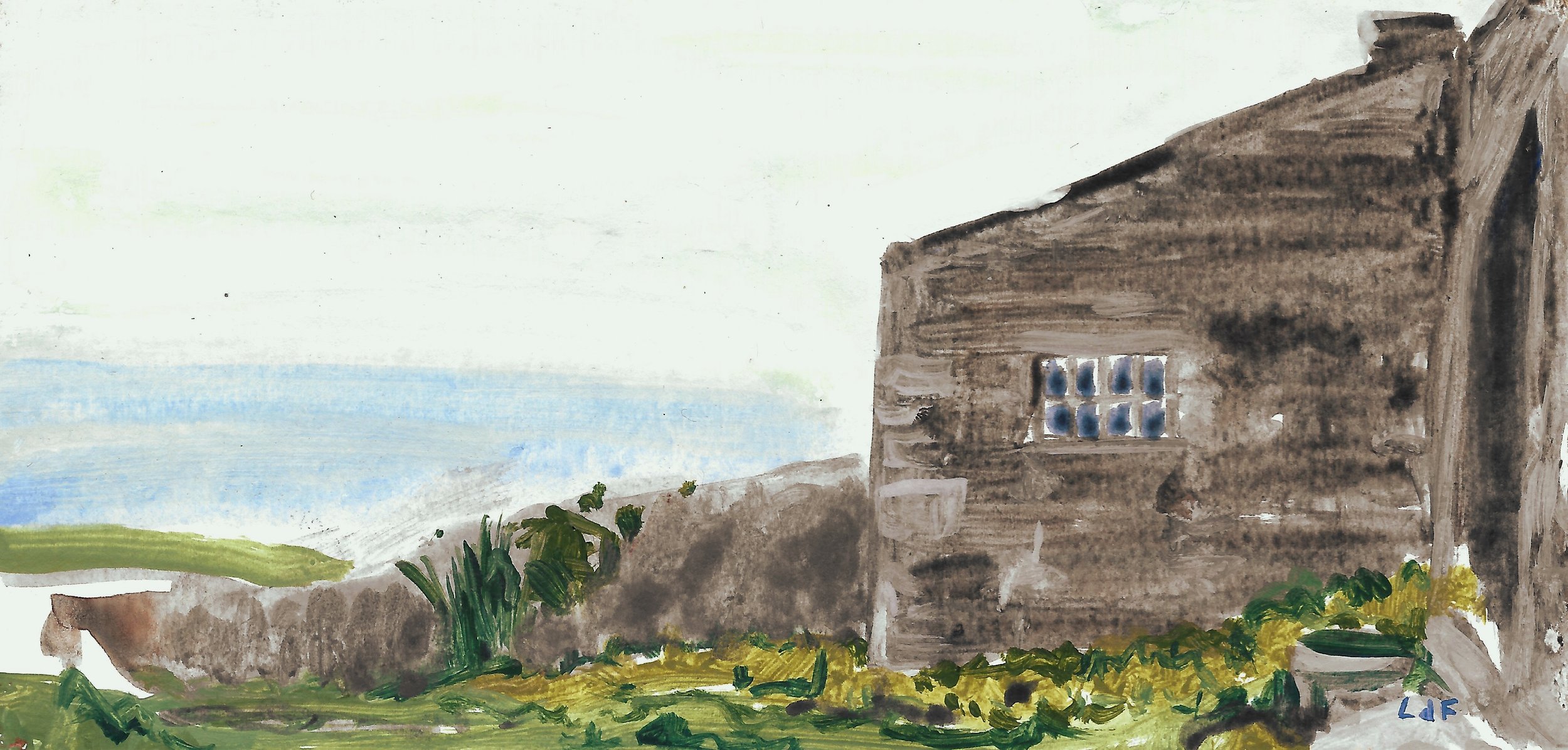
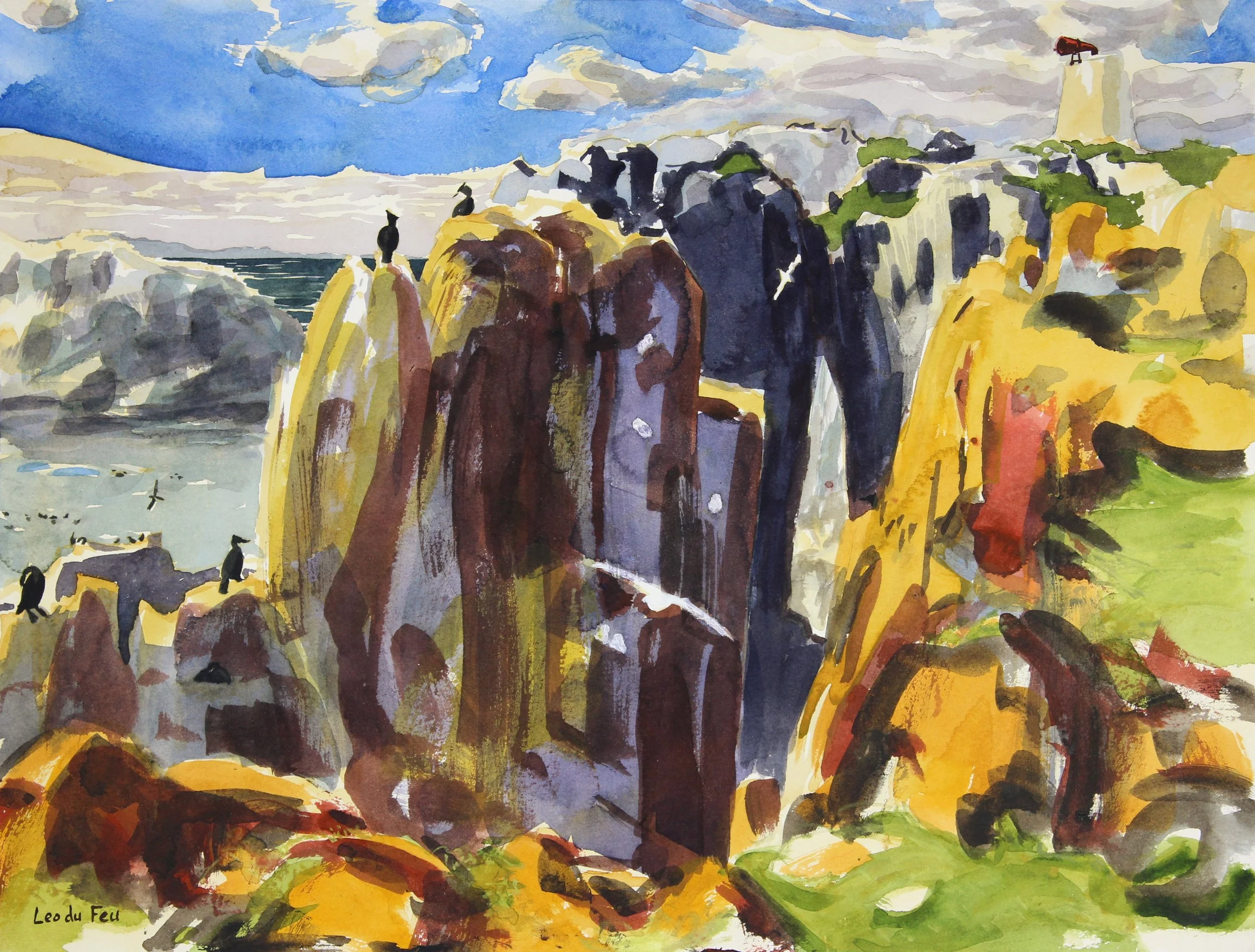
By Low Light | mixed media on paper, c.60x80cm, 2025, available




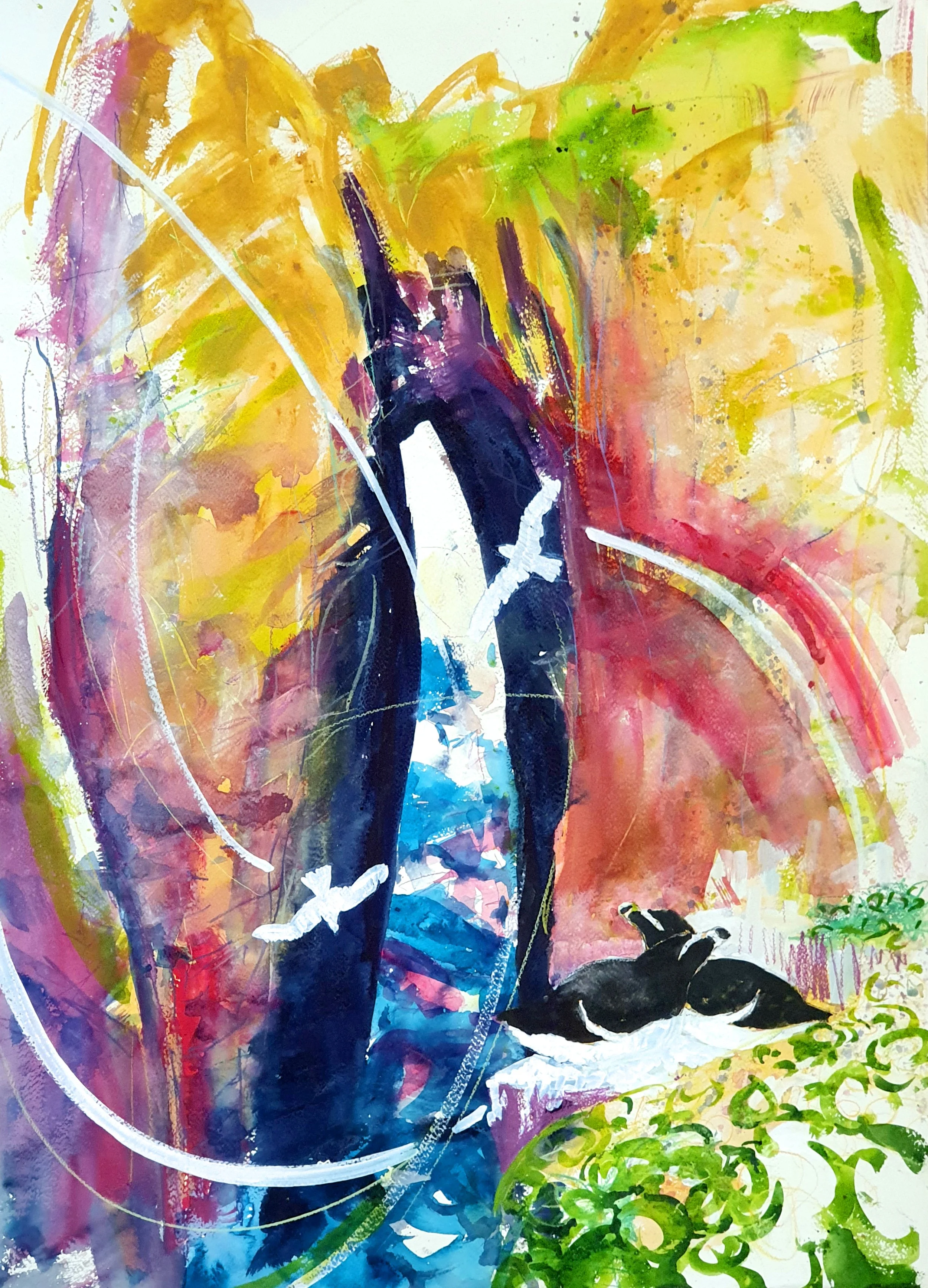

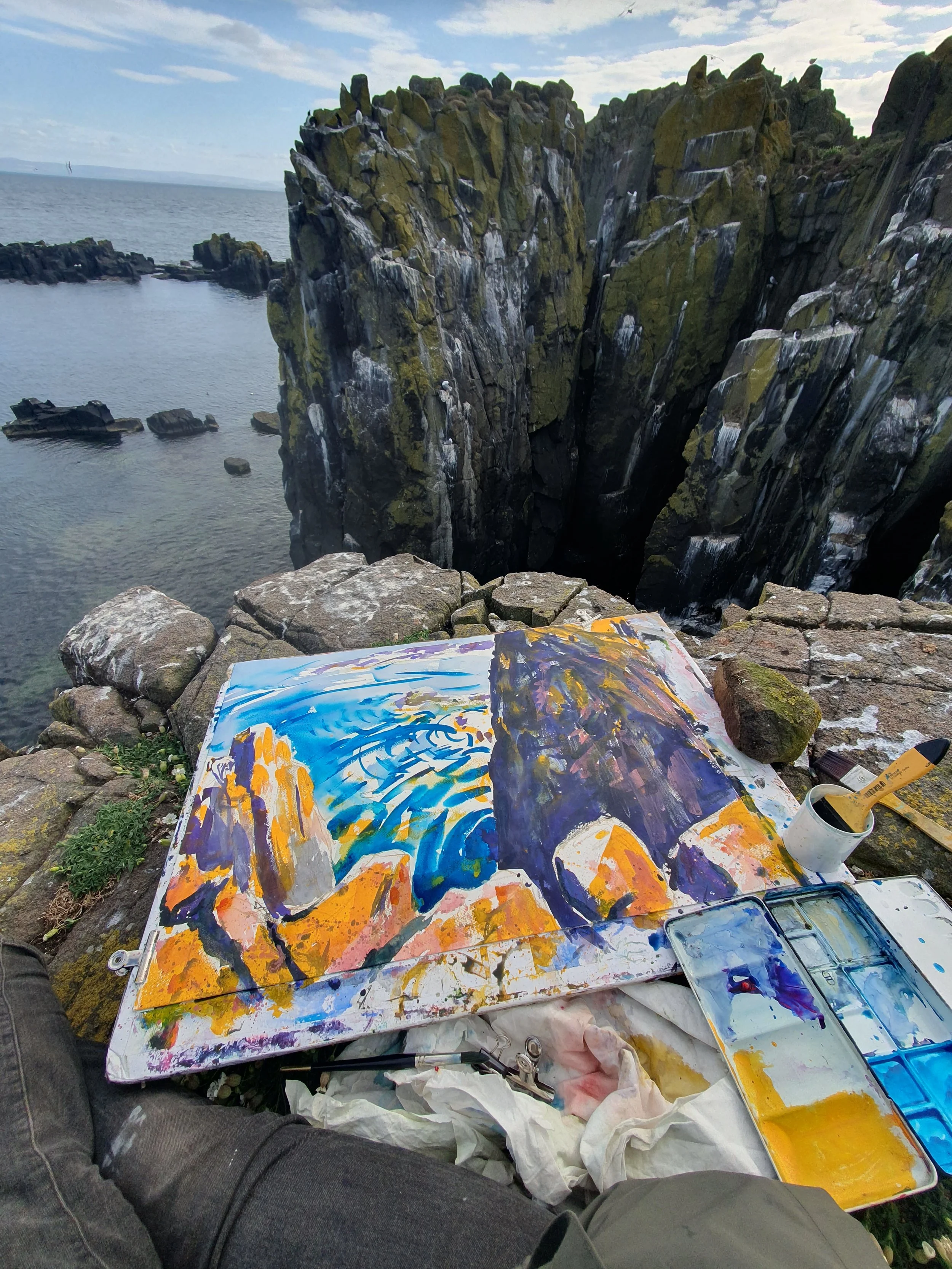
Sitting for hours looking down on, across to, up at the constant, swirling, whirling, calling, crying, smelly, mesmerising action of a seabird cliff is a most incredible way to spend one’s day. Absorbing all that and pouring it onto my paper. Seabird cliffs are awesome places.
Seabird Studies | mixed media on paper, c.60x80cm, 2025, available
Monitoring the potential effects of wind farms on kittiwakes.
A storm petrel and a moth in the night | graphite on paper, c.25x35cm, 2025, sold
Drawn in July 2025 on one of my twice-annual residency weeks on the Isle of May. I have known about the island’s storm petrels since their nesting was first confirmed several years ago but this was the first time I had visited in summer for some years, so was the first time I had any chance of seeing them. On our first night to my huge excitement I managed to get footage of a storm petrel on my trail camera.
A few nights later we sat out one night with the ringers and researchers and their mist nets. A storm petrel was caught and we got to watch close-up as it was weighed and measured and ringed in the ringing hut. It takes years of training to achieve ringing licenses so getting to watch this sort of thing is a rare treat and the sort of privilege I love in this life of art and nature I have created for myself.
Storm petrels are the most wonderful birds! They are so incredibly small. I sketched in the dark, almost unable to see my paper. I went back in daylight to sit in the exact spot my trail camera had been in and to make this drawing from the footage I had captured.
I’m delighted that this drawing was selected to be part of The Natural Eye, the 62nd Annual Exhibition of the Society of Wildlife Artists at the Mall Galleries in London in September 2025, and that it sold during the run of the exhibition.
Like unrisen dough, baby fulmar fluffball | mixed media on paper, c.25x35cm, 2025, available
Drawn and painted in July 2025 on one of my twice-annual residency weeks on the Isle of May. A little way along from the Isle of May Bird Observatory where we stay there’s a spot where fulmars usually nest. By peeping over a boulder we could get a safe view of this most gorgeous of chicks. It honestly looked like nothing more than a big plump of bread dough waiting to rise. Soft fluffy grey bread dough. I sketched a number of studies in pencil before making this piece, keeping it fresh, lots of paper left showing. I loved sitting with that chick.

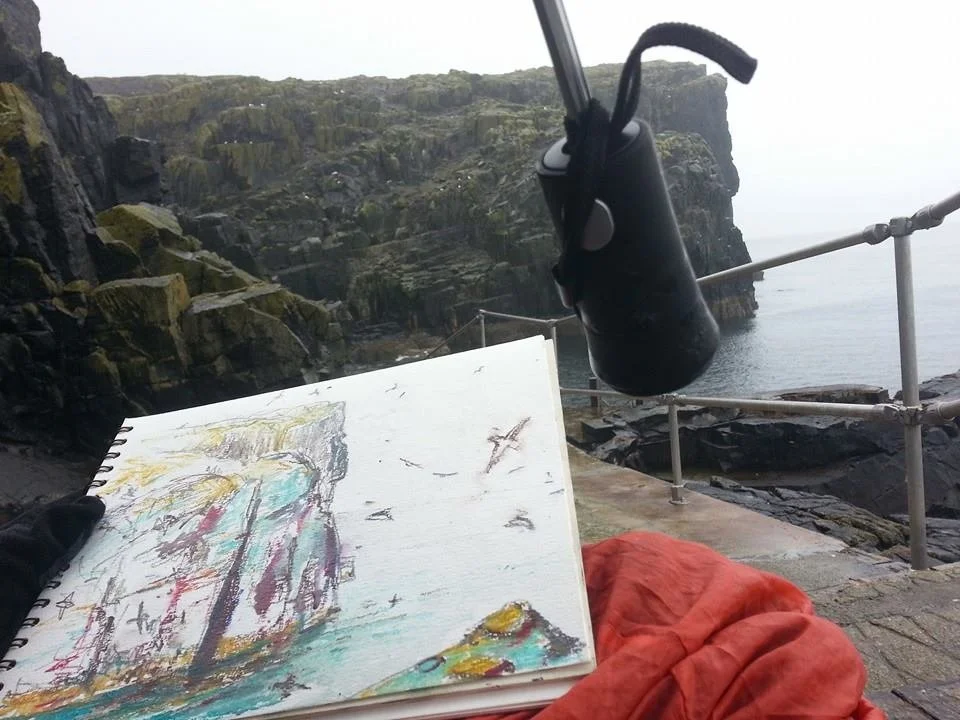
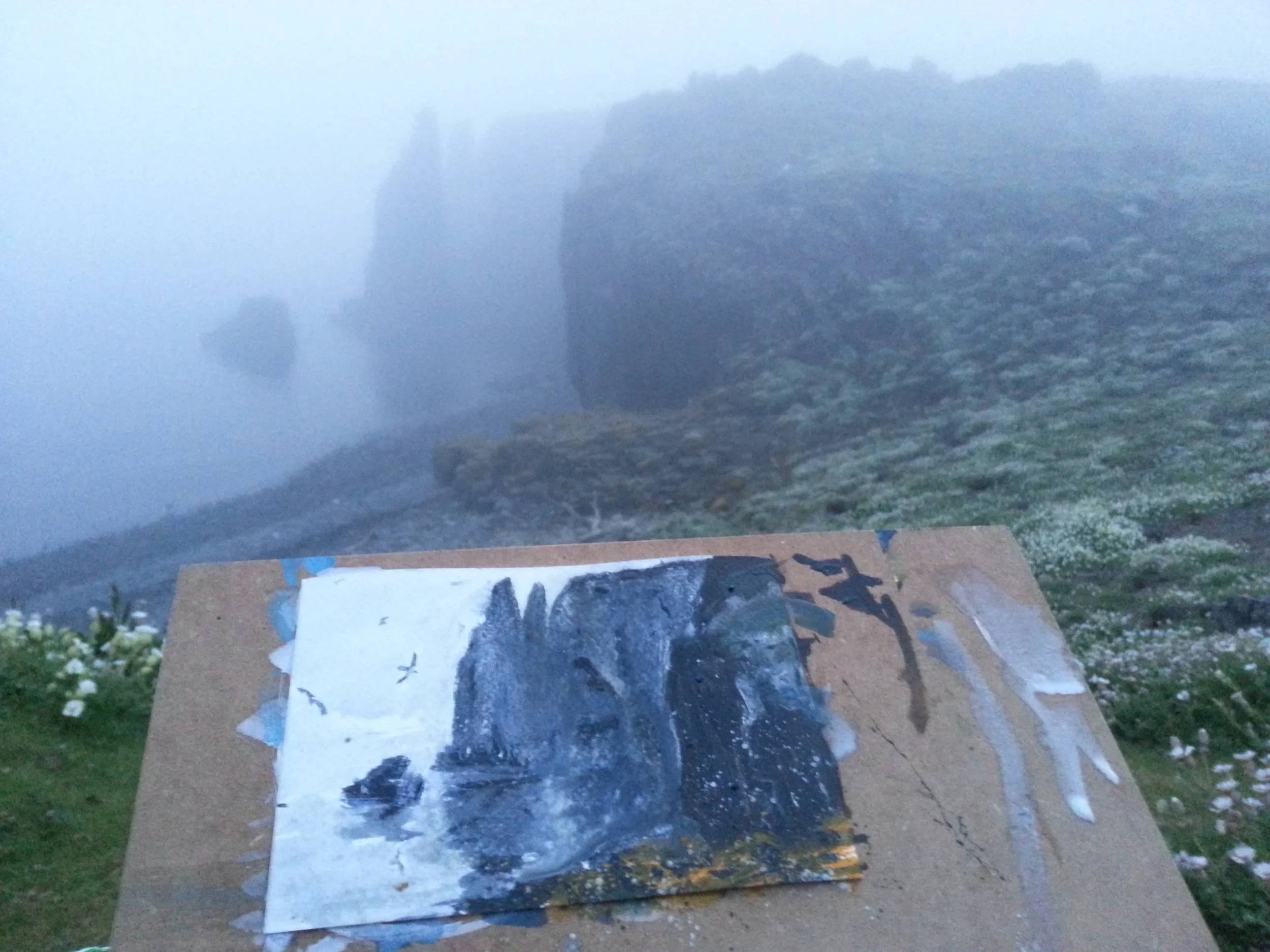

For nearly fifteen years, I’ve been making art on the Isle of May on Scotland's east coast, staying a week at a time in the Isle of May Bird Observatory. The island is a hugely important seabird island, breeding home in spring and summer to thousands upon thousands of birds - razorbills, guillemots, shags, cormorants, eider ducks, fulmar, herring & lesser black-backed and great black-backed gulls, kittiwakes, and 40,000+ pairs of puffins.
In autumn it becomes a drastically different place as the seabirds leave and instead grey seals come ashore to have their pups. Because it is an island, at the start and end of a long ocean crossing, all through the year birds (and butterflies, and other insects), often exhausted, might drop down to rest and feed up before continuing on their migration.
The Bird Observatory is housed in the Low Light lighthouse cottage on the island’s north-east coast. On the cliffs below Low Light, shags, guillemots, razorbills, fulmar and more lay their eggs, while puffins raise their chicks – pufflings! - in burrows on the surrounding slopes. Above the puffin burrows, amongst the thick spongey turf and green mounds of campion, gulls make their nests. It is alive with noise, and I love to sleep with the bedroom window open and the curtains drawn back, so I can listen to the chorus of life, the sound of the waves, watch the stars as I drift off, and often wake with the sunrise. Truly, it’s the absolute best.
Bird Observatories are special places, and those who stay in them have responsibilities: logging sightings and numbers each day, contributing to decades of continual bird-monitoring data. My time on the island is spent with five other conservation-minded artist colleagues, and all of us great friends. So much of our week, most of our week, is spent outside, watching, thinking, creating, recording, helping to build long-term datasets which offer important insights into the changes taking place in nature. And big changes are taking place in nature. And seabirds are being particularly badly hit.
As part of our duties, we walk all of the island’s paths several times daily, noting what we see and in what numbers. We carry out sea-watches, recording birds flying past at sea, as well as any whales, dolphins, and porpoises. Visible Migration counts are another task as we log birds flying overhead on their annual migrations. After so many years visiting, we are great friends with the seabird researchers and NatureScot staff who work and live on the island, and we relish the opportunity to quiz them on all things seabird.
Seabird researchers from the Centre for Ecology and Hydrology, and NatureScot staff are present on the island from spring to autumn. Between them, a wide range of seabird species - puffins, guillemots, razorbills, kittiwakes, shags and more - are studied in depth. The work we create during our time on the Isle of May helps draw attention to the increasingly precarious plight of seabirds, and to all that must be done to secure their future.
NatureScot manage the island and one of their key roles is to welcome the daily visitors – boats arrive from Anstruther, North Berwick, and Dunbar for a few hours each day. When the tourists leave, we residents breathe a deep sigh of relief and head back out with our painting boards to immerse ourselves again in our watching and creating.
And it’s not just wildlife that makes the Isle of May so special, it’s human history too, from the present day far back, back, back.
Firstly, artists. Many artists inspired by wildlife and nature come to the island and have done so for at least as long as the Bird Observatory has existed, and surely much longer. Keith Brockie, who has published two art books depicting the Isle of May’s wildlife in impressive detail (One Man’s Island, Return to One Man’s Island), is one of the most famous of artist residents. I have Keith to thank for first introducing me to the Isle of May when he offered me a space in the Bird Observatory on June week in 2013. In 2018, I had the honour of being offered a summer-long solo exhibition in the island’s still active Main Light Stevenson lighthouse.
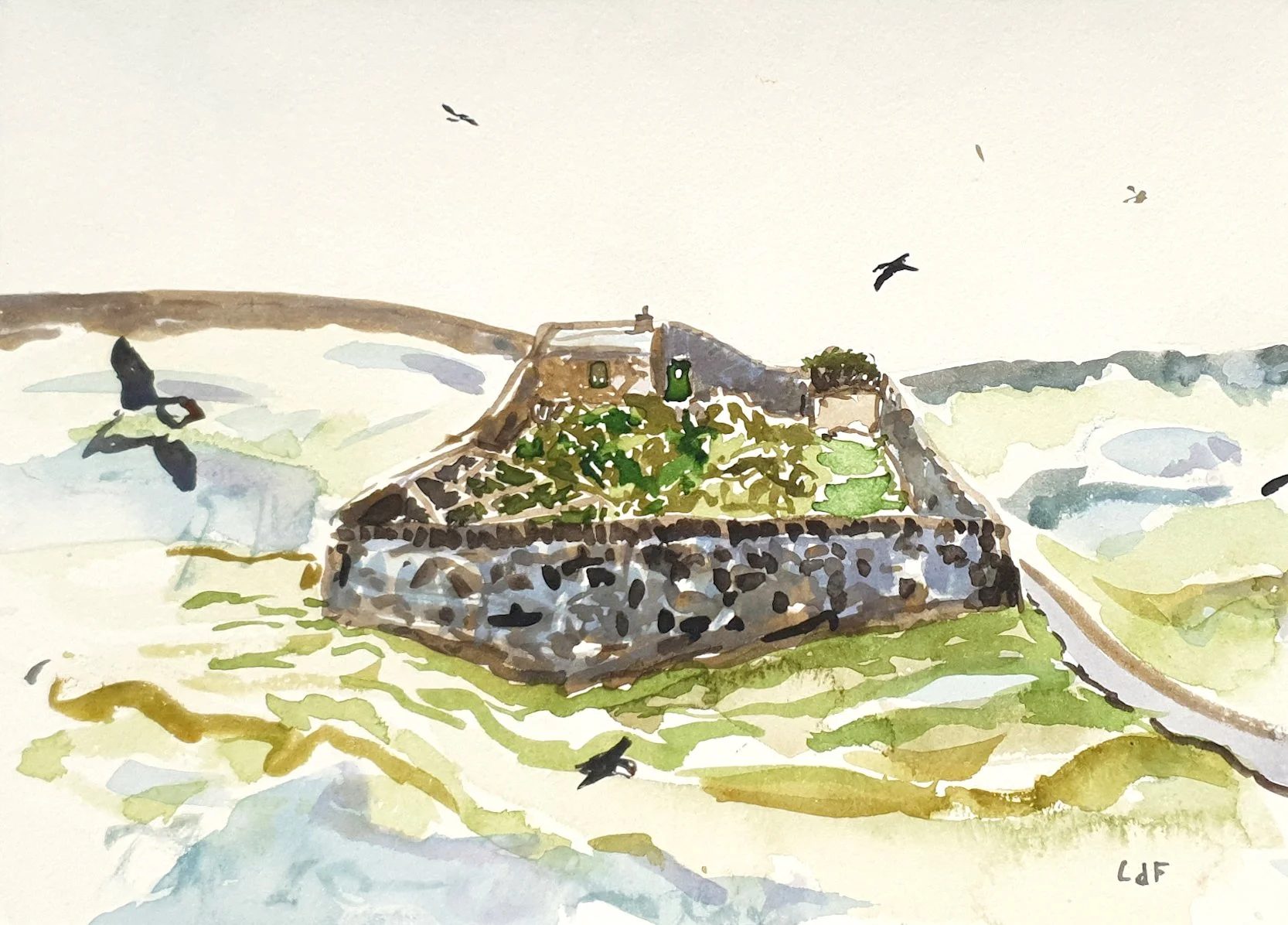
Centuries of lighthouse-keeping has left its mark across the whole island. In the lighthouses themselves of course, but also two tall foghorns and their thick, riveted, metal piping which still snakes the length of the island. The walled lighthouse gardens, said to have grown the finest carrots in Fife, the various accommodation buildings to house the keepers and their families, and the bathhouse washhouse at the top of Palpitation Brae.
Scotland’s oldest lighthouse is on the Isle of May, the remains of The Beacon, a three-storey tower built in 1636. It was topped with a great coal fire and, tragically, in 1791, was the site of the deaths of the light-keeper and his entire family, of likely carbon monoxide asphyxiation. Only their young baby
And then there are the stories dating back even further: the 7th Century monk Ethernan, shrines, chapel, monastery, priory, Benedictine monks, pilgrimages, Viking and English raiders, the fishing village, smuggling.
And more, and more.
Including more recently, in wartime. The island had significant naval and military presence due to its strategic location at the mouth of the Firth of Forth - the gateway to Edinburgh, docks and Methil and Rosyth and more, and the Forth Rail Bridge. In 1941, war artist Eric Ravilious visited the island, painting two beautiful watercolours which are still instantly recognisable to anyone familiar with the isle. I often stand on that same spot, imagining, knowing… Ravilious stood here, eighty years before.
All these past lives, I feel them. As I move, sit, sketch, think, chat my way around the island, I feel them.
It is the most wonderful place. Possibly my most wonderful of all places. Certainly my most important muse.
In my most recent Isle of May works, I’ve been leaning in to greater scale and colour and energy. Really bringing my island excitement to the fore. I’m so excited by the results and I can’t wait for my next visit.